
Skip to content

Molecular Laboratory Services: PCR, ddPCR and NGS

From targeted quantification to sequencing-based analysis, our molecular laboratory combines complementary technologies with specialist scientific expertise to support drug development and research. 
Speak to Our Lab Team
hVIVO_Lab_Services_BioFire

Molecular Analysis to Support Drug Development Programmes

Molecular laboratory services help researchers investigate biological processes, measure genetic targets and characterise genetic variation. From biomarker research and gene expression analysis to pathogen detection and genomic characterisation, molecular techniques generate valuable evidence throughout preclinical research and clinical development.

At hVIVO, we offer complementary molecular technologies, including quantitative PCR (qPCR), digital droplet PCR (ddPCR), next-generation sequencing (NGS) and multi-pathogen screening. Our approach combines these capabilities with scientific and biological expertise to help you generate reliable data and gain meaningful insight relevant to your research objectives.

Our expertise extends beyond data generation. We always keep the scientific question behind the analysis in mind, helping to put molecular findings into context and supporting a more informed understanding of your results.
Discuss your molecular laboratory requirements with our team

Our Molecular Laboratory Capabilities

Different molecular techniques answer different research questions. We can help you choose the most appropriate approach based on your target, sample type and study objectives.

Quantitative PCR (qPCR)

Measure specific genetic targets.

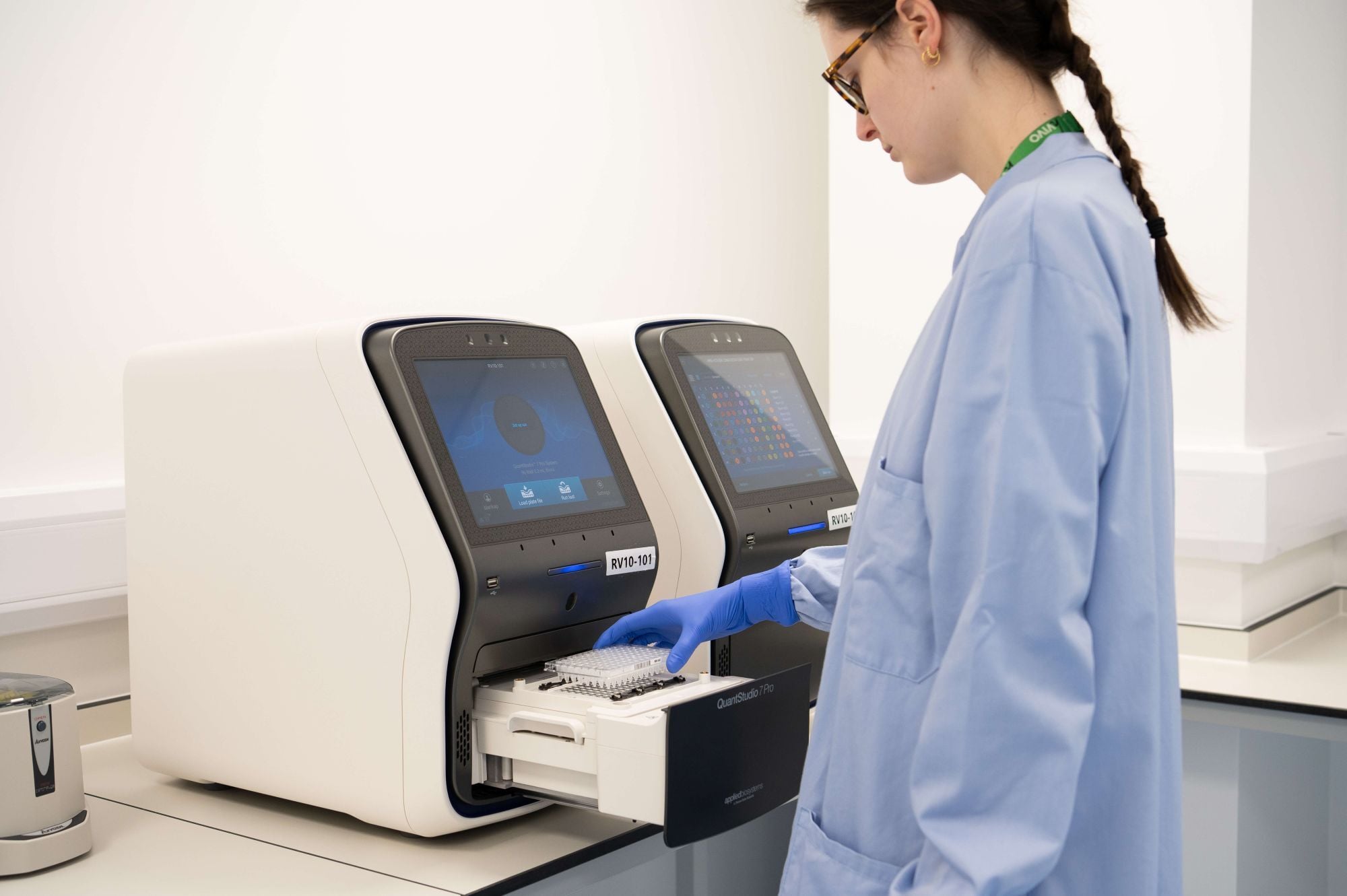
qPCR measures the amount of a selected DNA or RNA target by monitoring amplification in real time.

For influenza, we have validated qPCR assays, enabling us to report their sensitivity, accuracy and reliability to support study planning and interpretation. We are also developing qPCR assays for RSV, hMPV, and SARS-CoV-2, with validation anticipated in early 2027.

Potential applications include:

  • Gene expression analysis

  • Viral nucleic acid quantification

  • Detection of selected genetic targets in research samples

Digital Droplet PCR (ddPCR)

Quantify selected targets with high sensitivity.

ddPCR partitions a sample into thousands of individual droplets, with each droplet acting as an individual PCR reaction. Using this approach, the Bio-Rad QX700S platform can support absolute quantification without the need for a standard calibration curve.

Compared with conventional qPCR, ddPCR may offer improved sensitivity for some applications, helping researchers investigate lower concentrations of a target.

Potential applications include:

  • Gene expression analysis

  • Copy number assessment

  • Investigating low-abundance genetic targets

We are currently developing ddPCR assays for influenza, hMPV, RSV and SARS-CoV-2, and we can also assess the feasibility of project-specific assay development for viral, bacterial or human genetic material.

ddPCR can also complement NGS by allowing for focused analysis of a specific marker or genetic variant identified through broader genomic analysis. 

Next-Generation Sequencing (NGS)

Investigate genetic material in greater detail.

Sequencing determines the order of genetic building blocks in DNA or RNA. NGS can analyse many sequences in parallel, allowing researchers to investigate genetic characteristics and variation across a broader range of material than a targeted PCR assay.

Depending on the sequencing approach, NGS can support:

  • Whole-genome sequencing (WGS): examining genetic material across a genome.

  • Genotyping and variant analysis: identifying genetic differences, such as single-nucleotide variants and insertions or deletions.

  • Microbiome research: investigating the genetic material of microbial communities.

In antiviral development, NGS can help researchers investigate how a viral genome changes in response to treatment. For example, genetic changes may emerge as a virus evolves under treatment pressure, raising questions about potential antiviral resistance. Understanding these changes is an important consideration for both antiviral development and regulatory assessment.

NGS can identify genetic variation, but a detected variant does not, by itself, establish that a virus has become resistant. Bioinformatics, appropriate reference data and specialist virology expertise help assess the potential significance of findings in the context of the virus, treatment and study.

Multi Pathogen Screening

Investigate multiple potential pathogens in one test.

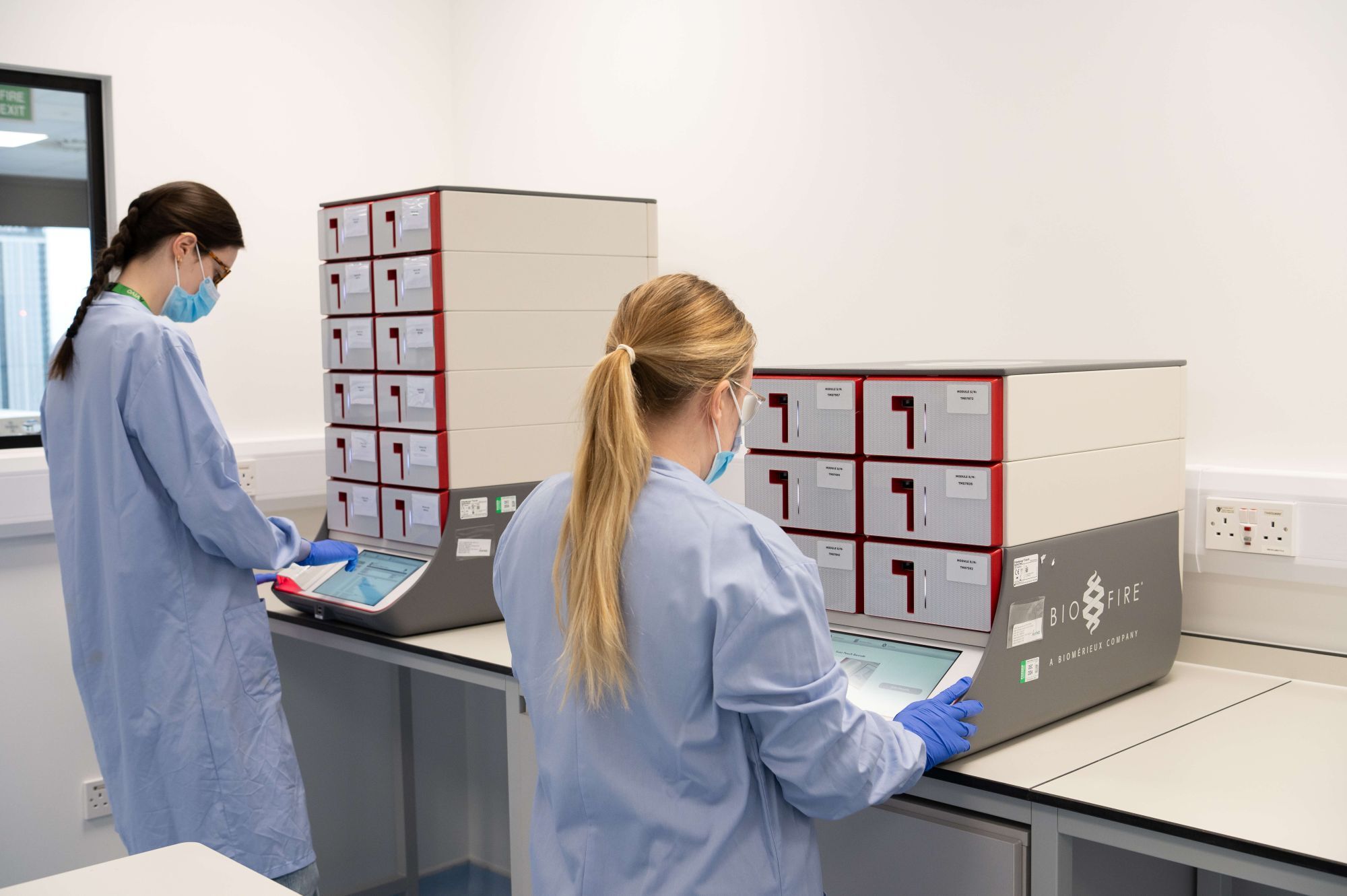
When researchers need to investigate several potential pathogens, multi-pathogen screening can qualitatively detect multiple infectious agents in a single test. The appropriate platform and panel depend on the pathogens of interest, sample requirements and study objectives.

hVIVO uses the bioMérieux BIOFIRE® system for multi-pathogen screening, including the BIOFIRE® Respiratory Panel 2.1, with results often available on the same day.

We also use the cobas® eplex system from Roche to distinguish between RSV A and RSV B, which can provide additional information when RSV subtype is relevant to the research question.

Manufacturer-validated assay performance information is available for these platforms, and the appropriate panel and its suitability should be confirmed for each application.

Automated Workflows to Support Molecular Analysis

Consistent sample processing is an important part of reliable molecular analysis.

We use laboratory automation, including the QIAGEN QIAsprint Connect, the Hamilton Genomic STARlet and the Hamilton Clinical NGS STARlet systems, to support sample preparation and molecular assay workflows.

Each Hamilton STARlet system supports a different stage of the workflow. One automates sample preparation for nucleic acid extraction on the QIAsprint, while the other supports assay setup for techniques including RT-qPCR, ddPCR, and NGS library preparation.

By standardising repeatable processing steps and reducing manual intervention, automation can support consistency across workflows, particularly when studies involve multiple samples or repeated assessments. The appropriate workflow depends on the sample type, analytical method and study requirements.

hVIVO_Lab_Services_Molecular_Services-1

From Molecular Data to More Meaningful Scientific Insight

Generating results is only one part of answering a research question. Understanding what those results mean requires considering the biology under investigation and the context in which the data was generated.

Different molecular techniques can provide complementary information, helping researchers build a more complete picture of the biology under investigation. The real value lies not only in generating results, but in understanding what they may mean in the context of the wider programme.

A detected genetic variant does not, by itself, establish its biological effect or clinical significance. Interpretation depends on the research question, suitable reference data and available evidence.

By bringing molecular analysis and specialist scientific expertise together within a coordinated laboratory workflow, we help you interpret findings in the context of your broader research objectives, with traceability from sample processing through to reporting.

Molecular Laboratory Services Across Drug Development

Molecular analysis can support a range of research and development activities, depending on the study objectives, sample requirements and intended data use.

Biomarker research

Investigate molecular targets and generate data to support biomarker identification, characterisation or evaluation.

Preclinical research

Analyse genetic targets and support studies such as biodistribution studies where appropriate.

Translational research

Investigate molecular findings alongside wider biological questions and other study data.

Clinical development

Support molecular assessments aligned with clinical study protocols, including screening participants for selected pathogens where required and analysing relevant samples during a study.

Infectious disease research

Detect pathogens, quantify viral nucleic acids, and investigate genetic variation.

Vaccine and antiviral development

Generate molecular data to investigate pathogens and assess relevant biological endpoints.

Genome and microbiome research

Characterise genetic variation or investigate complex microbial communities using appropriate sequencing approaches.

Why Work With hVIVO?

Why Work With hVIVO?

Choosing a molecular laboratory involves more than simply selecting a technique. The true value lies in using an appropriate method, generating useful data and interpreting the findings in the context of the programme. 

Complementary molecular technologies

Our capabilities span qPCR, ddPCR, NGS, multi-pathogen screening and automated sample-processing workflows. These techniques provide different types of information and can be used individually or in combination depending on the study.

Scientific expertise beyond data generation

We bring together molecular laboratory capabilities with scientific and biological understanding. This helps put findings into context, particularly when results require further investigation before their significance can be established.

Workflows tailored to your study requirements

The analytical method, sample preparation and processing workflow all influence how a study is delivered. Considering these requirements together can help align the approach with the research question and the intended data use.

Access to wider laboratory expertise

Molecular analysis may complement other laboratory capabilities, including biomarker strategy, assay development, virology and microbiology. Where relevant, these services can contribute complementary evidence to a wider research or development programme.

An Integrated Laboratory Offering

Molecular analysis is often only one part of a broader research or drug development programme. Our wider laboratory capabilities include:

Biomarker Strategy and Identification:

supporting the identification and evaluation of biomarkers relevant to a development programme.

Assay Development and Validation:

developing and evaluating analytical methods for their intended purpose.

Virology Laboratory Services:

supporting research involving viruses and infectious diseases.

Microbiology Laboratory Services:

providing complementary microbiological capabilities.

Laboratory Techniques, Technology and Automation:

exploring the technologies and workflows that underpin our services.

Programmes focused specifically on infectious disease and antiviral development

Explore our dedicated antiviral drug development capabilities to learn more about our specialist support for viral sequencing, bioinformatics and investigating potential antiviral resistance.

Molecular laboratory services analyse DNA, RNA and other selected genetic targets to investigate biological processes. Depending on the method, applications can include gene expression analysis, viral load quantification, pathogen detection, genetic characterisation and biomarker research.

qPCR and ddPCR are targeted techniques used to quantify specific genetic targets. NGS analyses many genetic sequences in parallel, enabling broader investigation of genetic characteristics and variation. The most suitable approach depends on the research question and the information required.
Yes. Molecular analysis can support preclinical research, translational research and clinical development by generating information on selected molecular targets, gene expression, biomarkers, pathogens, and genetic variation. However, the techniques used depend on the development stage, research question, sample type and intended use of the results.
Start with the question you need to answer. Targeted quantification may be appropriate when you know which genetic target you need to measure, whereas NGS may be useful when you need to investigate genetic material more broadly. Our laboratory team can discuss your objectives and the methods that may be appropriate.
The sample types depend on the assay, target and study requirements. Potential samples may include blood, serum, plasma and tissue. Sample suitability and processing requirements should be confirmed with the laboratory team when planning a study.

Related Resources

Explore our blogs and resources on molecular laboratory services, covering qPCR, ddPCR, NGS and multi-pathogen screening, and how choosing the right technique and interpreting results in context can support drug development and research. 
View all

Discuss Your Molecular Laboratory Requirements

Whether you need targeted nucleic acid quantification, sequencing-based analysis, or molecular support for a broader drug development programme, we can help you find an approach aligned with your research objectives.

Contact Us