

Respiratory trials are some of the most challenging studies to recruit for. Not because patients are hard to find, but because the realities of asthma and COPD create a set of scientific, operational, and human complexities that most CROs underestimate. At hVIVO, our recruitment and site services teams work with these populations every day, and the difference between a feasible study and an impossible one often comes down to details sponsors don’t see in the protocol.
Respiratory Patients Are Not a Monolith
Asthma and COPD span a wide range of ages, severities, and lived experiences. Asthma can appear at any age; COPD is overwhelmingly concentrated in older adults, often with decades of smoking history. These differences shape everything from outreach strategy to visit design. While younger asthma patients may respond to digital recruitment channels, COPD patients often require more traditional approaches — radio, print, community outreach, and clinician referral.
Incentives differ as well. Many respiratory patients participate because they want better treatments, not because of financial motivation. For some, monetary reimbursement can even interfere with benefits they rely on. Alternative forms of compensation — vouchers, travel support, or practical assistance — are often more appropriate.
The Stability Paradox
One of the most difficult aspects of respiratory recruitment is identifying patients who are severe enough to meet inclusion criteria but not yet escalated to biologics or maximum standard of care. These patients exist in a narrow window: frequent exacerbations, uncontrolled symptoms, but not yet on therapies that exclude them from early-phase studies.
Finding these individuals requires close collaboration with GP practices and respiratory clinics. Unlike academic sites that place their own patients into their own trials, hVIVO’s network allows clinicians to identify eligible participants across multiple studies simultaneously. This multiplies recruitment potential and ensures that patients are matched to the right trial at the right moment.
Devices, Technique, and Endpoint Quality
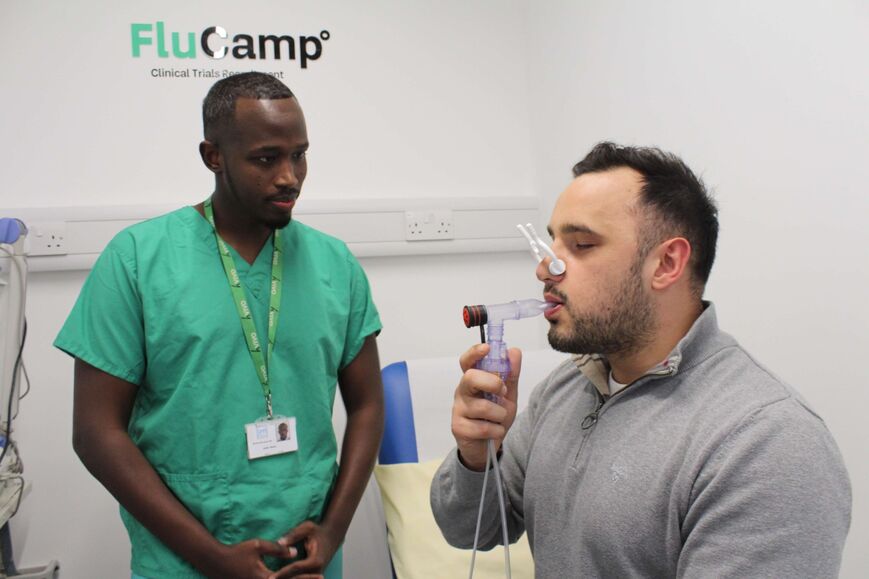
Respiratory trials often rely on inhalers, nebulisers, or other delivery devices. Technique varies widely, and poor technique can compromise endpoints. Many studies now include formal inhaler training and objective performance checks before dosing begins. Spirometry, too, is not as straightforward as it appears. COPD patients are familiar with it; mild asthmatics often are not. Reversibility criteria can be difficult to meet, especially for patients on minimal therapy.
These nuances affect screen failure rates, timelines, and feasibility. They require staff who are proficient in advanced respiratory assessments — spirometry, FeNO, FOT, methacholine challenges — and who can coach patients through procedures safely and consistently. Few commercial sites have this capability; hVIVO’s respiratory units were built around it.
Seasonality Matters More Than Sponsors Expect
Exacerbations are often seasonal, driven by viral circulation. For studies requiring a history of exacerbations, winter recruitment windows can be essential. For studies requiring stability, winter can be a risk. Trial design must account for these patterns, and recruitment plans must anticipate how seasonal variation affects eligibility.
Outpatient Designs Often Fail Respiratory Patients
Sponsors increasingly ask whether respiratory challenge studies can be run as outpatient trials. The idea is appealing: more naturalistic environments, fewer overnight stays. But for respiratory patients, outpatient designs can be unsafe, impractical, or scientifically counterproductive.
Many COPD patients cannot reliably travel into central London. Pollution exposure alone can trigger symptoms. Daily commuting is unrealistic for older adults with limited mobility. Even asthma patients may struggle with repeated travel during symptomatic periods. Inpatient quarantine protects both safety and data quality, and for many patients, it is simply the more humane option.
Patient‑Centred Design Is Not a Buzzword — It Is Operational Reality
Respiratory recruitment requires thinking beyond the protocol. It requires asking: What does this person’s life look like? How do they move? Who do they rely on? What will make them feel safe?
This is where hVIVO’s model stands apart.
Our teams consider mobility limitations, wheelchair access, partner or caregiver attendance, visit flexibility, weekend scheduling, and environmental comfort. We adapt rooms, waiting areas, and equipment to the needs of older or frail patients. We ensure continuity of staff and environment, so participants see familiar faces. We design recruitment pathways that respect the realities of chronic disease.
Owning our sites allows us to do this. We do not rely on rented spaces, temporary pop‑ups, or shifting locations. Respiratory patients know exactly where they are going, who they will see, and what to expect — and that stability matters.
The Real Differentiator
Most CROs say they have networks. Most say they can recruit respiratory patients. But respiratory recruitment is not about networks alone. It is about understanding the patient, anticipating their needs, and designing a study environment that supports them.
Our teams do not just screen for eligibility. They look at the person behind the data — their mobility, their home life, their comfort, their fears, their limitations, and their motivations. That holistic approach is what makes respiratory recruitment feasible, predictable, and humane.