

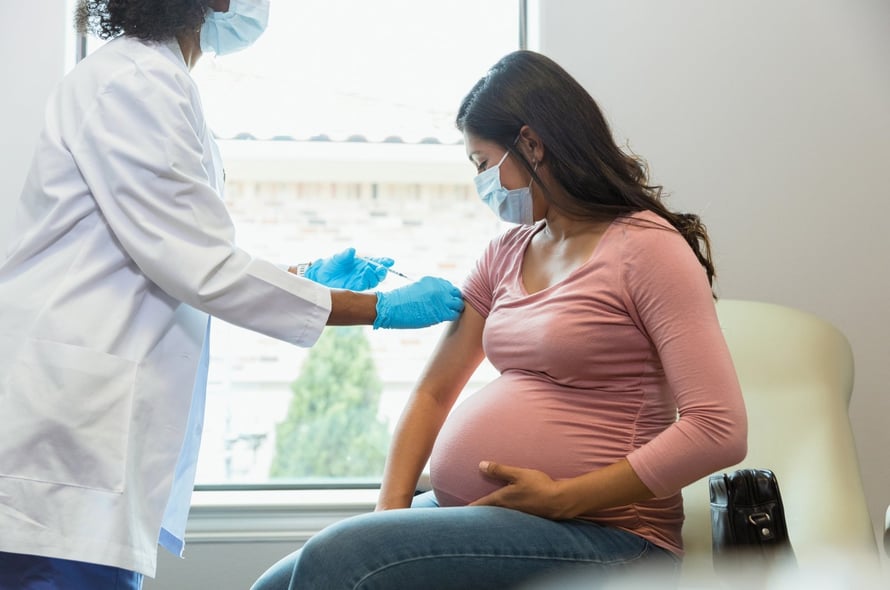
The new real‑world evidence showing that maternal RSV vaccination can reduce infant hospitalisations by around 80% is an important milestone — not only for RSV prevention, but for how we think about protecting the youngest and most vulnerable infants. For years, we’ve known that RSV poses a disproportionate burden in the first months of life, particularly in low‑ and middle‑income countries.
At hVIVO, we are proud for the small but significant part we played in helping in the development of the pre-F based RSV vaccines that are in use today. Our RSV challenge model data helped ignite the field by providing the first human data demonstrating that the pre-F vaccines really do work in quashing RSV disease.
What we have not had, until now, is large‑scale, real‑world confirmation that maternal immunisation can meaningfully change the RSV burden trajectory.
This new dataset, drawn from more than 4,000 pregnancies, helps fill that gap. It shows that the protection observed in controlled trials can translate into real‑world benefit at population scale. That matters enormously for global uptake, especially in settings where access, affordability, and health‑system capacity shape vaccine adoption.
Maternal immunisation is a uniquely powerful strategy
RSV is one of the few pathogens where the timing of vulnerability makes traditional infant vaccination extremely challenging. The youngest infants — those under three months — are the ones at highest risk of severe disease, yet they are also the least able to mount a protective immune response to active vaccination. You cannot vaccinate a newborn against RSV and expect immediate protection. You have to deliver that protection before birth.
Maternal immunisation solves that problem elegantly. By boosting antibody levels during pregnancy, we can provide passive immunity from day zero — precisely when infants need it most. The new real‑world findings reinforce what controlled clinical studies have already shown: this approach works, and it works where it matters.
A broader RSV landscape is taking shape
What’s emerging now is a multi‑layered RSV prevention ecosystem:
- Maternal vaccines that protect infants from birth
- Monoclonal antibodies that offer targeted protection, especially where maternal vaccination is not feasible
- Future combination vaccines that may integrate RSV with other respiratory pathogens
Each of these tools plays a different role, and together they form a more resilient strategy than any single intervention could in isolation. The new maternal‑immunisation data strengthens that foundation by validating routine use in real‑world conditions.
Why this is scientifically validating
For those of us who have worked in RSV for many years, this moment is particularly meaningful. The mechanism of action behind maternal immunisation — boosting maternal antibodies to protect infants immediately after birth — has long been supported by early human data, including controlled challenge studies. Seeing that mechanism translate into large‑scale, real‑world impact is a powerful confirmation of the underlying science.
It also underscores the value of early‑phase models that can reliably predict clinical outcomes. When early human data aligns with real‑world evidence, it gives regulators, clinicians, and global health agencies greater confidence in deploying these tools widely.
A step forward for global health
RSV remains a major cause of infant hospitalisation worldwide, and the burden is highest in countries with the fewest resources. A maternal vaccine that is effective, scalable, and now supported by real‑world evidence has the potential to shift that burden meaningfully.
There is still work to do — improving access, ensuring equitable rollout, and integrating maternal immunisation into antenatal care pathways — but the direction of travel is encouraging. This new evidence strengthens the case for broader adoption and helps accelerate the transition from clinical promise to public‑health impact.
For the field, it’s a significant step forward. For infants and families, it’s something even more important: a clearer path to protection during the period of greatest vulnerability.

