

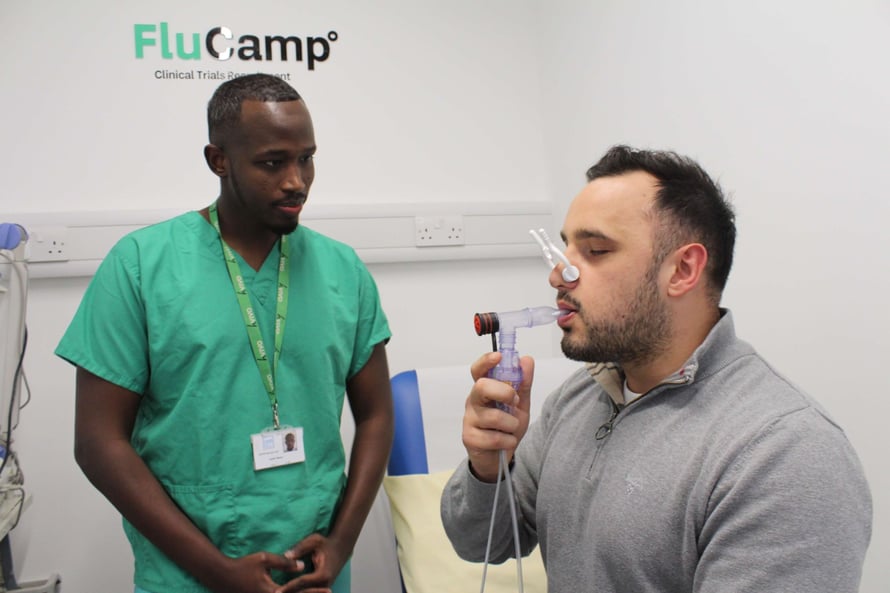
The launch of ILiAD Biotechnologies’ pivotal Phase III human challenge trial for BPZE1 marks a genuine inflection point — not just for whooping cough prevention, but for the evolution of human challenge studies themselves. It is the first time a pertussis vaccine will be evaluated in a Phase III challenge model, and if successful, BPZE1 could become the first vaccine to achieve licensure on the strength of two human challenge trials. That alone makes this a landmark study.
But the significance runs deeper.
A trial designed to answer the questions regulators actually care about
One of the most encouraging aspects of this programme is its scientific and regulatory clarity. The study is large — more than 500 participants — and, crucially, it evaluates BPZE1 against the current standard‑of‑care Tdap vaccine. That comparative design matters. Regulators want to see whether a next‑generation vaccine can meaningfully improve on existing protection, particularly in preventing colonisation, which is central to transmission.
The earlier Phase IIb challenge study, now published in Lancet Microbe, already provided strong evidence that BPZE1 can prevent or markedly reduce colonisation by virulent B. pertussis. In that trial, up to 60% of vaccinated participants had no detectable colonisation after challenge, compared with 25% in the placebo group, and bacterial burden was reduced by more than 97%. Those findings validated both the vaccine’s mechanism and the robustness of the challenge model — and they set the stage for a pivotal Phase III trial designed to answer the remaining questions regulators care about.
The data generated from this Phase III study will be directly relevant to the real‑world problem: despite high global vaccination coverage, pertussis continues to circulate, outbreaks remain unpredictable, and current vaccines offer only short‑lived protection. A vaccine that can block colonisation — and potentially transmission — would be a major step forward.
This trial is built to answer that question with precision.
Why a challenge model is not only efficient — but ethically strong
Pertussis field studies are notoriously difficult. Outbreaks don’t follow seasonal patterns, incidence fluctuates dramatically year to year, and baseline vaccination rates make traditional efficacy trials slow, expensive, and often inconclusive. A controlled human challenge model solves these issues by generating high‑resolution efficacy data in a predictable, timely way.
But there’s another point that often gets overlooked: for bacterial pathogens like B. pertussis, challenge studies can be more ethical than field trials. In a controlled setting, volunteers are closely monitored and can be treated immediately with an effective antibiotic to resolve infection. In contrast, field studies rely on natural exposure, which is unpredictable and may result in delayed diagnosis or treatment.
A well‑designed challenge model allows us to answer critical scientific questions while maintaining a high standard of participant safety — something that is central to how we operate at hVIVO.
A major step forward for bacterial challenge models
This study also represents a broader shift. For years, viral challenge models have been widely used to accelerate early‑phase development. Bacterial challenge models, however, have been slower to be widely adopted. A pivotal Phase III pertussis challenge trial demonstrates that the field is ready — scientifically, operationally, and ethically — to use these models to support global licensure.
It shows regulators are increasingly open to high‑quality challenge data when the design is rigorous, the endpoints are clinically meaningful, and the pathogen is well understood. It also shows that challenge studies can play a central role not just in early development, but in pivotal decision‑making.
A milestone for hVIVO — and for the future of vaccine development
For us at hVIVO, this is the largest human challenge trial we have ever conducted. It draws on years of work developing challenge models, building the bacterial assays, and ensuring the infrastructure and expertise are in place to run a study of this scale safely and effectively.
But more importantly, it represents what the future of vaccine development can look like: faster, more precise, more ethical, and more aligned with the questions that matter most for public health.
If BPZE1 succeeds, it won’t just be a breakthrough for whooping cough. It will be a proof point for the power of bacterial challenge models — and a template for how we can bring better vaccines to patients sooner.

