
Infectious disease study design has changed
Every year, promising infectious disease programmes stall or fail — not because the science was wrong, but because the study design couldn't keep pace with where the field had moved. Getting this right requires more than a CRO. It requires BSL3-certified infrastructure, validated pathogen models, and a team that has run these challenges before. Today's teams are navigating:
- RSV programmes where a single serotype no longer covers the patient population
- Influenza trials where strain selection is misaligned with current circulating variants
- hMPV studies where the regulatory path and the challenge model are both still being defined
- Vaccine platforms where immunogenicity endpoints are scientifically compelling but not yet regulatory-ready
- Outpatient respiratory trial protocols where sample variability undermines the data before lock
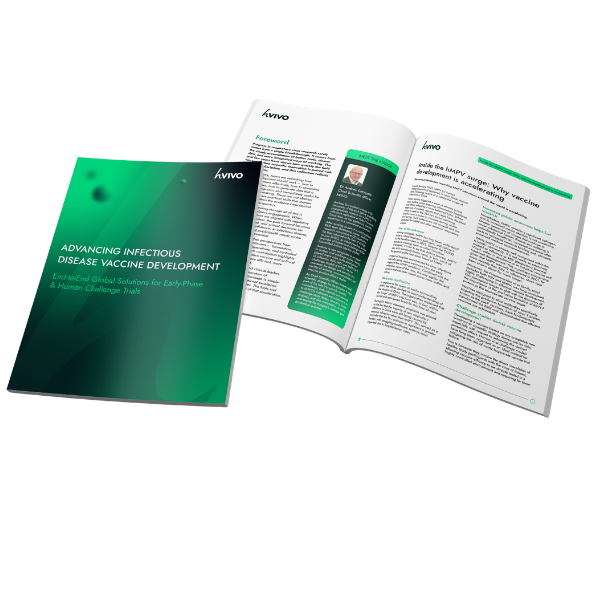
Written by the team behind 5,000+ infectious disease challenge participants.
The perspectives in this guide are grounded in decades of hands-on human challenge trial experience. Dr Andrew Catchpole — DPhil in influenza replication from Oxford University, virologist, and Chief Scientific Officer at hVIVO — leads the company's infectious disease scientific strategy and has played a key role in developing challenge models for influenza, RSV, hMPV, HRV, and SARS-CoV-2. hVIVO supports seven of the world's ten largest biopharmaceutical companies, operating BSL2 and BSL3-certified clinical and laboratory facilities at its Canary Wharf quarantine unit alongside a specialist scientific team.


Our Accreditations
Good Clinical Practice (GCP)
Good Clinical Practice (GCP) is an international ethical and scientific quality standard; for designing, conducting, recording and reporting trials. Ensuring participant safety prevails over the interests of science and society.

Human Tissue Authority (HTA)
hVIVO is accredited by the Human Tissue Authority (HTA), meaning that we have been recognized by the HTA as compliant with standards and regulations for the ethical and legal removal, storage, and use of human tissue. A HTA license is essential, as hVIVO handles human tissue for various research purposes.

Good Clinical Laboratory Practice (GCLP)
All clinical trials comply with GCP and/or GCP for Laboratories (GCLP) guidance. Human Challenge Agent-only clinical studies that do not involve IMP also comply with GCP/GCLP.
hVIVO is a UKAS accredited Testing Laboratory No. 27882